
News
Jun. 18, 2026
Share:
Sintered Metal Filters require proper cleaning to maintain their effectiveness. One common question is whether to use ultrasonic cleaning or chemical cleaning. Both methods have their advantages and disadvantages. Understanding the differences between these two cleaning techniques can help you make an informed decision. Ultrasonic cleaning uses sound waves to remove contaminants, while chemical cleaning relies on specialized solutions to dissolve dirt. Both methods aim for maximum filtration efficiency, but they work in different ways.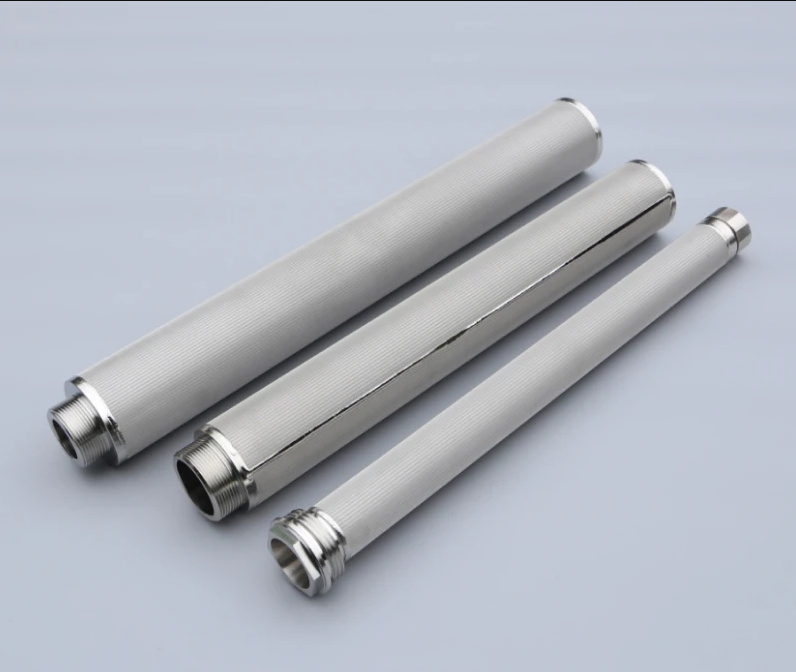
**Ultrasonic cleaning is generally more effective for detailed cleaning of sintered filters, while chemical cleaning is better for removing larger amounts of sludge and grease.** The choice depends on your specific needs and the type of contaminants present.
Ultrasonic cleaning can reach tiny crevices in sintered filters, ensuring a thorough clean. This method uses high-frequency sound waves to create tiny bubbles in a cleaning solution. When these bubbles collapse, they create powerful energy that dislodges dirt and contaminants.
Since ultrasonic cleaning does not require brushing or scrubbing, it is less likely to damage delicate filter materials. This is especially important for maintaining the integrity of sintered filters.
Ultrasonic cleaning often uses water-based solutions, making it a more eco-friendly option. It significantly reduces the need for harsh chemicals, making it safer for both the user and the environment.
Chemical cleaning is generally less expensive than ultrasonic cleaning when dealing with large quantities of sintered filters. It can cover a broader surface area and is efficient for bulk cleaning.
Chemical cleaners can target specific types of contaminants, such as oils or waxes. This makes it a good choice for industries where sintered filters are heavily saturated with particular substances.
Chemical cleaning does not require specialized equipment beyond what is standard in a cleaning facility, making it accessible to many. This method can be easily integrated into existing workflows.
| Aspect | Ultrasonic Cleaning | Chemical Cleaning |
|---|---|---|
| Effectiveness | Highly effective for intricate areas | Good for large surface areas |
| Cost | Higher upfront cost | More cost-effective for bulk |
| Environmental Impact | Environmentally friendly | Can use harsh chemicals |
| Risk of Damage | Low risk of material damage | Potential for damage if misapplied |
Before choosing a cleaning method, consider the type and level of contamination on your sintered filters. For heavy grime or oil, chemical cleaning may be the best option. For detailed cleaning, ultrasonic cleaning would be preferable.
Consider the costs associated with each method. If you clean numerous filters regularly, investing in ultrasonic cleaning might be worthwhile in the long run.
Conduct tests with both methods to determine which is more effective for your specific filters and contaminants. Each application may yield different results.
In conclusion, deciding between ultrasonic cleaning and chemical cleaning for sintered filters depends on your cleaning needs, budget, and the nature of the contaminants. Ultrasonic cleaning offers a precise and eco-friendly approach, while chemical cleaning provides cost-effective bulk solutions. By assessing your specific requirements, you can choose the most effective method for your sintered filters.
Sintered metal filters are made by fusing metal particles together to create a porous structure. They are used for filtration in various applications due to their durability and efficiency.
The cleaning frequency depends on the level of contamination and usage. Regular checks can help determine when cleaning is necessary.
When done correctly, ultrasonic cleaning should not damage sintered filters. However, always follow the manufacturer's recommendations.
Chemical cleaners can be effective but may contain harsh substances. Always follow safety precautions and choose environmentally friendly options when possible.
The cost can vary widely based on the equipment and cleaning solution used. Investing in high-quality ultrasonic cleaners may result in long-term savings.

Related Products


Stainless Steel Pleated Filter Cartridge
Guangtong's stainless steel pleated filters are composed of stainless steel mesh material, featuring a wide filtration area, strong dirt-holding capacity, and fast filtration rate.
View More

Wedge wire filters are high-performance metal filtration components known for their excellent filtration efficiency, high strength, strong structural rigidity, and uniform slot openings.
View More

The cylindrical wire mesh filter is a metallic filtration component engineered based on the principle of rigid sieving, characterized by uniform pore distribution, excellent gas permeability, and high efficiency in cleaning and purifying filtrates.
View More

Constructed from durable materials, the stainless steel pre-filter exhibits extended service life and superior filtration accuracy. Its compatibility with various air and water filtration systems renders it an optimal choice for diverse environments and applications.
View More

Perforated tubes and etched tubes are precision metal filter elements with high mechanical strength, large opening area, and easy cleaning and maintenance, making them ideal choices for coarse filtration and mechanical protection.
View More

The wire mesh filter discs, also known as a flanged-edge filter, features a reinforced outer frame surrounding the filtration medium to ensure structural stability and rigidity. It is typically designed as a disposable product and requires periodic replacement.
View More

The leaf disc filter employs innovative technology to provide high-efficiency filtration, while allowing easy cleaning, replacement, and maintenance. It is an ideal solution for a wide range of liquid filtration applications.
View More

Extruder screens are metal filtration components used to remove impurities from molten plastics. They offer strong impact resistance and excellent structural stability, making them resistant to deformation and damage while ensuring long-term reliable operation.
View More

Stainless steel basket filters are metal filter elements made of perforated metal and woven mesh. They offer precise filtration, good corrosion resistance, and are often installed upstream of critical equipment such as pumps, control valves, and steam traps.
View MoreSearching For Solutions For Metal Filters,Not Just Suppliers
— READY TO START A PROJECT?
Fast Responses from premium suppliers
One Request, Multiple Quotes
Reach Global Suppliers
Accurate Business Matchmaking
Get A Free Quote


